Showing posts with label Brave New World. Show all posts

Friday, August 20, 2010

Brave New World's Aldous Huxley


Many times in literature, novelists are influenced by their early life and aspects not related to literature. They may be influenced by other writers and thinkers of the time period, or they may be influenced by tragic events that occur. Aldous Huxley was one such novelist whom was immensely influenced by his surroundings and his peers. His characteristic pessimism stemmed from negative events in his early life. Aldous Huxley’s upbringing and surroundings greatly affected the viewpoints and opinions he expressed in his writings and novels.
Huxley was born into an intellectual family. Both his immediate and extended family was composed of known intellectuals and writers. Huxley lived a privileged early life, showing interest in science and literature. Later in his childhood, he experienced tragedies that would eventually influence his writings and stories. His mother and brother both passed away in his teenage years, and he also began to lose his eyesight due to a severe eye infection (Gale). The First World War also begins to rear its head in this time period. All of these events influence Huxley’s early works. His early poems tell of his feelings of loneliness and negative feelings toward society (Christianson).
During the 1920’s Huxley began a world tour in which he visited different countries. Huxley said in one of his writings that he longed to be, “along the road.” His travels took him many places including India, Japan, and Malaya (Christianson). He wrote many fiction and non-fiction books of his travels. His travelling supplied him with ample information and events that gave the novels he wrote character and a uniqueness only he possessed. During his tour of Asia, Huxley also began to become interested in the Hindu faith and the mysticism surrounding their culture. His interest in mysticism and Hinduism began appearing in his writings later in his life (Christianson).
One of the most influential factors on Huxley’s writings was society itself. Huxley spent much of his time contemplating the future of society. His thoughts and prophecies were summed up in his most memorable novel, Brave New World. His predictions on future society’s characteristics and attitudes were very accurate. Written in 1933, Brave New World predicted attitudes that were present years later in Hitler’s Nazi Germany. The tendency towards social unity and racial superiority is a mainstay of Brave New World. Aldous Huxley observed the governments of the time accumulating power and predicted that eventually freedom would be abolished in favor of faux happiness. These predictions may be applied to the Soviet Union, where communism was supposed to increase the happiness of its subjects, but instead robbed them of freedoms and liberties ("Aldous Huxley A Life of the Mind" 2-7).
Aldous Huxley was very much influenced by his surroundings, peers, and time period. His observance of politics, social tendencies, and different world cultures shaped him as a writer and as a person. They aided in forming Huxley’s signature pessimism and satiric tone. They gave him a base in which to prophesize future society and its many unforeseen problems and challenges. Because of his influences, Huxley will be remembered as one of the great thinkers and philosophers of the twentieth century.
Picture:
http://www.american-buddha.com/huxley_pix_1111.jpg

Works Cited

Aldous Huxley A Life of the Mind. 1st ed. New York City, New Yord: Harper Perennial,

2006. 2-7. Print.

"Aldous Huxley." Gale Online Encyclopedia. Detroit: Gale, 2010. Literature Resource

Center. Web. 19 Aug. 2010.

Christianson, Scott R. "Aldous (Leonard) Huxley." British Travel Writers, 1910-1939.

Ed. Barbara Brothers and Julia Marie Gergits. Detroit: Gale Research, 1998.

Dictionary of Literary Biography Vol. 195. Literature Resource Center. Web. 19

Aug. 2010.

Thursday, August 5, 2010

Final Words on Brave New World


Aldous Huxley wrote Brave New World as his prediction of what the future may hold. He used well rounded characters to tell the story of a world in which almost every aspect of life was controlled. The settings of the book were very detailed and intricate, from the factory where new members of society were made to the deserts of the Savage reserves. The futuristic characteristics of the society were also very intriguing. These included the different castes of people, from Alpha to Epsilon, the helicopter transportation systems, and the drug soma, which offered escape for distressed members of society. Huxley's opinions on personal freedoms were very evident in the novel. He seemed to feel that governments were on a path that would lead to the destruction of personal liberties under the ideal of "happiness." The novel suggests that government only desires complete control of its own citizens and it will try to gain this control through any means necessary, including taking away the natural right of birthing and parenting a child. Huxley may have acquired this view of government watching the Nazi fascist machine come to power in the early 1930's. At the end of his novel, one of the main characters commits suicide because of the pressures of "civilized" life. Aldous Huxley may have been trying to communicate that if a government ascertains the amount of control it did during the novel, modern ways would perish and all traces of the past erased by the new regime. Brave New World serves as a commentary to what would become if a world government successfully gained an unimaginable amount of control and changed life as we know it.
Picture: http://bookcoverarchive.com/images/books/brave_new_world_revisited.large.jpg

Wednesday, August 4, 2010

Quote from Brave New World August 3, 2010 Page 259

"Thew door of the lighthouse was ajar. They pushed it open and walked into a shuttered twilight. Through an archway on the further side of the room they could see the bottom of the staircase that led up to the higher floors. Just under the crown of the arch dangled a pair of feet."
-Brave New World Page 259
The weight of the "Brave New World" that the Savage was thrust into finally crashes down upon the Savage. The new lifestyle thrust upon the world by the maniacal government has finally driven a man to take his own life. The pleasure-centered ways of the new world does not sit well with the Savage. He feels life should and needs to be tough to make it worth living. These people living in such sin angers the Savage because of the beliefs instilled in him by the natives back on the reserve. He cannot stand living with such filthy people.

Quote from Brave New World August 3, 2010 Page 238

"The Savage nodded,rrowning, "You got rid of them. Yes, that's just like you. Getting rid of everything unpleasant instead of learning to put up with it."
-Brave New World Page 238
The Savage rails against the society in his arguement with Mustapha Mond. The society got rid of all of it's inconvieniences so that the people would live in happiness. The did away with sickness and insects to ensure peoples happiness. The Savage believes that inconveniences are necessary. He believes this because he was born and raised in a society that praised mental and physical toughness. The inconveniences and hardships made life worth living in the Savages eyes.

Tuesday, August 3, 2010

Brave New World August 3, 2010 Pages 236-259

The Savage attempts to purify himself from the evils of the civilized world. He moves away from the civilized world, preffering to live alone. He purifies himself of dirty thoughts. He makes himself physically sick and whips himself to gain purtity. He becomes a sort of hermit in a future world. The society finally finds him and uses him as a form of entertainment. The society turns even the most driven individual to act impurely and participate in an orgy. Because of his actions, the Savage decides to commit suicide. The skewed and perverted views of civilization caused a pure and work-oriented man to commit suicide. The pressures of civilization were too great to handle for someone who was not conditioned to live in civilization. Is it really civilized when you have to be condtioned before being able to conciously think to be able to survive? That kind of life would be entirely unbearable.

Monday, August 2, 2010

Quote from Brave New World August 2, 2010 Page 223


"The optimum population," said Mustapha Mond, "is modelled on the iceberg-eight-ninths below the water line, one-ninth above."
-Brave New World Page 223
Mustapha Mond explains the way that the society is shaped to the Savage. There can only be a very small percentage of Alphas in the whole population. There can only be a small percentage of Alphas because they share the closest resemblance to a free-thinker. They are conditioned and sleep taught, but not as severely as the rest of society. A large group of free-thinkers would become aware of their own oppression and stir up the masses in a revolution against the ruling powers. The government attempts to avoid these situations at all costs by creating a smaller amount of Alphas.
Picture:http://www.focusedperformance.com/iceberg.jpg

Quote from Brave New World August 2, 2010 Page 222


"...we have no wish to have our throats cut," he answered. "We believe in happiness and stability. A society of Alphas couldn't fail to be unstable and miserable."
-Brave New World Page 222
Mustapha Mond explains to the Savage why having a civilization of Alphas wouldn't work. A civilization of the best and brightest would not work because they would detest being assigned the menial jobs of society, such as a street sweeper or doorman. They would also protest against poor working conditions. These things have happened throughout history. In the 1880's and 1890's many protests began in the United States over working conditions in factories. The workers banded together and organized protests to demand better conditions and pay. These actions all disrupt the peace, which the society of Brave New World is trying to avoid.
Picture:http://www.newberry.org/outspoken/exhibitimages/1b06.jpg
Song: The Hand That Feeds - Nine Inch Nails
http://www.youtube.com/watch?v=xwhBRJStz7w&playnext=1&videos=IL76pv5_PnE&feature=artistob

Brave New World August 2, 2010 Pages 210-235


The Savage snaps, seeing the government hand out the drug soma. He feels that soma is one of the controlling factors of the people's minds and limits the peoples freedom. The peoples need for soma can be compared to addictions to prescription drugs that we see today. The men and women of the future society use soma to escape the hardships of everyday life, just as the men and women of today use prescription painkillers to accomplish the same task. The difference between today and the imagined tomorrow is that in today's world the government attempts to stop drug abuse, while the fictional government attempts to increase drug use. During this section the Savage and Mustapha Mond also begin discussing ideologies. The Savage believes in freedom, even at the price of unhappiness, while Mond believes in peace and happiness at the price of freedom and freewill. Mustapha Mond believes his viewpoints quite logical. The Savage sees that even though these ideas are logical, they go against liberty and commonsense.
Picture:http://www.drugfreehomes.org/wp-content/uploads/2009/11/drug-abuse1.jpg

Brave New World August 2, 2010 Pages 185-210

The Savage begins to resent living in the civilized world. He sees his mother die in a hospital where no one is especially bothered by death. Delta children mock him for caring about his mother. The Savage begins to change his opinions of the new civilized world. This is because he sees all the nice things of civilized life and sees that they are only being used to control the population. The Savage hates the promiscuity of civilized life. He calls Lenina a whore in a murderous rant. If I were the Savage I would also despise the ways of the new world. Orgy and sex are large parts of a normal citizens life. These actions go against all of the morals of a normal person of today. Casual sex is frowned upon today where it is encouraged in the world of tomorrow. I would mirror the actions taken by the Savage if I were put into his position.

Sunday, August 1, 2010

Quote from Brave New World August 1, 2010 Page 179

"Bernard's other victim-friend was Helmholtz. When, discomfited, he came and asked once more for the friendship which, in his prosperity, he had not thought it worth his while to preserve. Helmholtz gave it; and gave it without reproach..."
-Brave New World Page 179
Bernard begins to envy Helmholtz for some of his whole-hearted characteristics. Even after Bernard abandoned Helmholtz for his new found friends, Helmholtz held no hard feelings against Bernard after Bernard came moping back from his vanity. Bernard is in a sort of awe for Helmholtz's forgiveness. He feels that Helmholtz should be angry with him, and is shocked that he is not. Helmholtz seems to deny the human trait of revenge, and Bernard is jealous of his denial.

Brave New World August 1, 2010 Pages 159-184


In this section, the Savage and Helmholtz begin to discuss Shakespeare and other poetry. Helmholtz scoffs at the unorthodoxies of Shakespeare's works which include a mother and father and conflict. The reason Helmholtz is so negative towards the ancient works of poetry is because he has been conditioned to scoff at these things. If I, or anyone else had been taught that babies only come from machines and not mothers and fathers, we would have the same response to the literature. The society was taught that mothers and fathers were smut and had no place in civil society. These things were taught because eliminating allegiances was necessary to create an obedient society. The only allegiance any one person held was the allegiance to the government. This was one way in which the government gauranteed itself complete sovereignty and peace. No civilization has accomplished this task yet, but accomplishing this task means taking away freedoms and civil liberties.
Picture:http://www.globe-shop.com/images/iteme2261.jpg

Saturday, July 31, 2010

Brave New World July 31, 2010 Pages 133-158


In this section of the novel, Bernard's character begins to change again. He loses his pride and his spirit sinks once again. He realizes that all the friends that he thought were real were in reality just an illusion. The Savage is a large factor in the humbling of Bernard. The Savages defiance to be shown at a large party was the ultimate downfall of Bernard's popularity. Bernard's pleadings with the Savage were to no avail and the men and women of the party began to doubt Bernard. The party-goers left, leaving Bernard alone. This helped Bernard come to the realization that these people were not his friends. Bernard began to see the superficiality of the society, seeing that these people were faking their real feelings towards Bernard. This section also shows how Bernard is very superficial himself. He lets fame and popularity influence his actions and thoughts. He himself reflects the societal tendencies.
Picture:http://www.cartoonstock.com/newscartoons/cartoonists/cgo/lowres/cgon137l.jpg

Quote From Brave New World July 31, 2010 Page 178


"The golden T lay shining on Lenina's bosom. Sportively the Arch-Community-Songster caught hold of it, sportively he pulled, pulled. 'I think,' said Lenina suddenly, breaking a long silence, 'I'd better take a couple of grammes of soma."
-Brave New World, page 178
This quote illustrates the use of drugs in future society to avoid stressful situations. The drug soma is virtually a cop-out to having to deal with real emotions and the stresses of everyday life. Presently, all human beings are put in stressful situations. Drugs and alcohol are two different methods of dealing with the stresses, but people who use these methods excessively are looked down upon. In the future, using drugs to alleviate stress is commonplace and preached.
Picture:http://galerijamode.com/wp-content/uploads/soma-carisoprodol-medication.png

Saturday, July 24, 2010

Brave New World July 24, 2010 Pages 133-158

Bernard's character begins to change in this section of the novel. After he retrieve Linda and John from the savage reservation in New Mexico, his character takes on a new persona. He becomes more confident and is drunk on his success. Other people are very interested in John because of his civilized mother and savage upbringing. Bernard receives much praise for his discovery. He changes from an unsure, almost anti-social government worker, to a man who is very confident in what he does and a man who does very well with his female counterparts. In his head is is still the same man he was before his fame, but his actions reflect those of a new man. His thoughts still show his disdain for social politics and the ways of society. Many of the others in his department begin to doubt his change, even though they act as if he is a great man for finding John.

Wednesday, July 21, 2010

Quote from Brave New World July 21, 2010 Page 119

"Ford! to kiss, slobberingly, and smelt too horrible, obviously never had a bath, and simply reeked of that beastly stuff that was put into Delta and Epsilon bottle (no, it wasn't true about Bernard), positively stank of alcohol. She broke away as quickly as she could." - Brave New World, Page 119
This quote shows the contempt Lenina feels for the ex-civilized Linda. Lenina hates being around Linda because she is dirty and smells of alcohol. She also disapproves of Linda's affection toward herself and Bernard. In the future, dirt is frowned upon. Since Lenina is not used to seeing any amount of dirt or smelling any kind of unclean smell, she finds the conditions that Linda lives in squalid. Humans are so conditioned that anything that goes against there conditioning is unbearable.

Tuesday, July 20, 2010

Quote from Brave New World July 20, 2010 Page 111

"The spectacle of two young women giving breast to their babies made her blush and turn away her face. She had never seen anything so indecent in her life."-Brave New World Page 111
This quote embodies the very serious social changes wrought by the future government. Leaders ripped the right to bear children from families and essentially ripped apart the family. The government taught that having and rearing children was immoral and unorthodox. They taught these ideas to very young children in their sleep. Mothers with children were looked down upon in the "civilized world." The government believed that controlling the birthing and minds of its subjects would lead to a public that was totally submissive.

Brave New World July 20, 2010 Pages 107-132


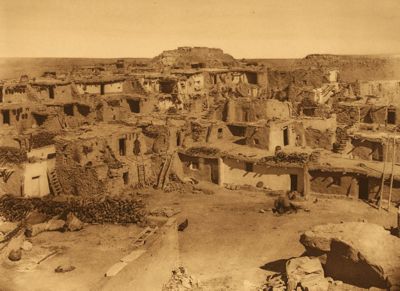
In this section of the novel, Bernard and Lenina are struck by the ways of life of the savages. Bernard and Lenina both believe that they are civilized and therefore more superior to these people. Lenina looks down her nose at these people because she believes they are unclean. Civilized people believe,"Cleanliness is next to Fordliness." The civilized people are taught this through sleep teaching, thus implanting the fear of dirt, smell, and other unclean things. Lenina is also shocked by the aging of some of the savages. Disease and old age do not exist in the civilized world. This is why Lenina is shocked and horrified by the sight of some of the older savages. The sight of a nursing mother also embarrasses Lenina. Having a raising children is considered vulgar in civilized society, but the savages cling to this custom of the old ways. The pueblo style of houses the savages live in are also foreign to civilization.
Picture:http://www.theintellectualdevotional.com/blog/wp-content/uploads/2010/01/mishongnovi_pueblo1.jpg

Monday, July 19, 2010

Quote from Brave New World July 19, 2010 Page 84

"Orgy-porgy, Ford and fun,
Kiss the girls and make them One.
Boys at one with girls at peace;
Orgy-porgy gives release."
-Brave New World Page 84
This quote explains the thought processes used by the futuristic society. They would partake in sexual orgies as recreational activities. Large numbers of men and women would gather to join in orgies that consisted of certain rituals, sayings, and sex. This particular quote was one of the sayings said at the orgy. It was taught to children in their sleep, as to cement the idea in the children's brains. Sex and orgies are two of the bases of the future sexually charged society. The pleasure-centered characteristics of the society helped keep the public oppressed and "happy."

Saturday, July 17, 2010

Quote from Brave New World July 17, 2010 Page 88

"For what was there that one could do in private.(Apart ,of course, from going to bed: but one couldn't do that all the time.) Yes, what was there? Precious little." - Brave New World Page 88
This excerpt shows Bernard's feelings towards the socialization of his society. The government had taken away the basic principle of being ones own. Public unity was the word that was preached. This quote also embodies one of the key points of the novel. Huxley attempts to show the dangers of anti-individualism. He shows that the spirit of one does not necessarily need to be dumped into a social being in which each member of society serves as one cell to the body. The quote also shows how the future humans are fearful of being alone. There were very, very few activities one participates in alone or in small groups. This fear eventually led to the demise of affection felt for one other. This, in turn, led to the casual promiscuity of the population. Pleasure worshipped while passion despised. These ideas led to the flawed social structure of Huxley's imagined, sexually-charged future society.

Friday, July 16, 2010

Brave New World July 16, 2010 Pages 81-106

The author Huxley characterizes the "savages" of the reserves as those who did not conform to the created realities of the new world government. They are those who did not forfeit their right to birth offspring and care for their young. This right of keeping and raising offspring which we today feel as an inalienable right and a requirement of being human, was taken by the world government to aid in creating a subservient class of people. The proletariat created questions little and basks in temptations of the flesh. Huxley portrays the general population as ignorant of all ideologies and very attracted to pleasure that serves no real purpose. This revelation reflects the characteristics of current societies as well. Many people are dumbfounded when it comes to current problems, ideas, and policies, but delight in practices that serve no vital purpose. Huxley realized that ignorance is a very real problem in modern society.